

The Complete Guide to Washing Jeans: Tips for Raw, Black, Shrink-to-Fit and Pre-Washed Denim
Not all jeans are created equal. And when it comes to washing, the type of denim matters more than most people realise.
Washing advice needs to match the fabric and the wearer’s priorities. So instead of blanket advice (“never wash raw denim”), here’s a better way to think about it:
Start by knowing what kind of jeans you have. Then decide how you want them to look and how long you want them to last. That’s how you find the right washing method.
This guide walks you through the four main types of jeans and links to detailed articles with step-by-step instructions.
TL;DR — Quick Summary
- Wash when dirty. Too often = faster wear. Too rarely = brittle denim.
- Soak before wear (even sanforized) to reduce shrinkage and set creases.
- Hand wash for fades. Machine wash for ease—but it removes more indigo.
- Use vinegar to preserve colour and kill bacteria.
- Never tumble dry.
- Tailor your method to the denim: shrink-to-fit, sanforized, black, or prewashed all behave differently.
When and How Often to Wash Your Jeans
When I was growing up (in the ’90s), jeans got tossed in the laundry after three or four wears—washed weekly without a second thought. But you don’t need to wash them that often. Water, detergent, and spin cycles all add wear and tear.
When I got into raw denim in the mid-’00s, I was told to wait at least six months before washing. That didn’t really work for me either. Wait too long, and the fibres get brittle—making breakage more likely.
These days, I follow a simple rule that balances longevity and fades:
Wash. When. Dirty.
If they haven’t gotten dirty in two or three months, I’ll usually wash them anyway. Because even if they’re not smelly, a rinse helps reset the fabric and extend their life.
Not All Jeans Are Washed the Same
Before you decide how to wash your jeans, you need to know what kind of denim you’re dealing with. Different types fade and shrink differently—and not all care methods suit every pair.
Unsanforized Raw Denim (aka Shrink-to-Fit)
This is denim in its most “untamed” form. The fabric hasn’t been pre-shrunk, which means it can shrink up to 10% after the first soak—especially in length.
- Soak before wear. A hot soak (no detergent) shrinks the fabric and sets creases before fades form.
- Buy bigger. Especially in the waist and length. Waistbands stretch with wear, but legs don’t.
- Plan for shape changes. Denim stretches most when damp—putting them on while wet can help shape the fit.
- Skip the soak? You can—but if you end up washing later, the fit and fades may shift in ways you didn’t want.
Important: If you don’t soak unsanforized jeans before wearing, you might end up with misplaced honeycombs and unwanted shrinkage. And if you wash them unexpectedly later, they might not fit anymore.
3 Pro Tips to Minimise Shrinkage 💡
- Use cold water to reduce shrinkage.
- To stretch the waist, wear the jeans damp and move around.
- To stretch the legs, step on the hems and pull gently upward. Protect your floor from indigo stains.
Sanforized Raw Denim and One-Wash Jeans
These are much more predictable. The fabric has been pre-shrunk (or already washed once), so you usually don’t need to size up or soak before wear.
- Optional pre-soak. A hand wash without detergent helps soften the fibres—but it may reduce contrast in fades.
- For high-contrast fades: Delay washing, wear as much as possible.
- For vintage-style fades: Wash more often, like your mum would.
Black Raw Denim
Black jeans fade differently than indigo. Most people want them to stay black as long as possible.
- Avoid washing. That’s the best way to preserve the colour.
- When you must: Hand wash with vinegar to help fix the dye.
- Skip the soak if you want maximum colour retention.
- Re-dyeing is an option. When the colour fades, domestic black dyes (like Dylon) can restore it.
Industrially-Abraded (‘Pre-washed’) Jeans
These are already faded when you buy them—often with factory-applied creases, abrasions or holes.
- Machine washing is fine. They’ve already shrunk and lost some dye, so further change is limited.
- But don’t expect longevity. Factory distressing weakens the denim—especially if it’s been ripped or sanded.
My Washing Routine (and Why I Soak First)
I always soak my raw denim jeans before I start wearing them (also when they’re sanforized). It softens the fabric and removes some of the starch, which helps the denim last longer.
Yes, it might reduce contrast a little. But that’s a trade-off I’m happy to make.
When the jeans get dirty—or smelly—or if they just haven’t been washed in a while, I’ll either hand-wash or machine-wash them. If they’re really dirty, I use the machine. Otherwise, I go with a hand wash.
It also depends on the kind of fade I’m going for. If I want high contrast, I’ll usually delay the first machine wash as long as I can.
The 8 Steps of Hand-Washing Jeans
Hand-washing is the gentlest way to clean your jeans. It helps preserve the dark, raw look because it typically removes less indigo than machine-washing—though results can vary depending on the denim.
Follow these steps:
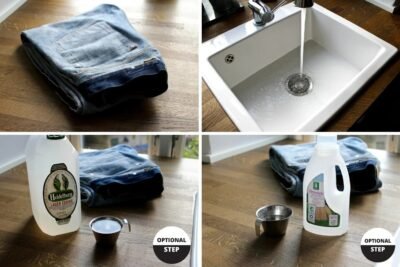
- Turn the jeans inside out.
Minimises indigo loss and helps avoid vertical creases. - Fill a sink, bucket or tub with lukewarm water.
- Add ½ cup (1 dl) of white vinegar (the clear kind). [Optional]
Helps preserve colour, soften fabric, and kill bacteria. - Add a small amount of non-bleach detergent. [Optional]
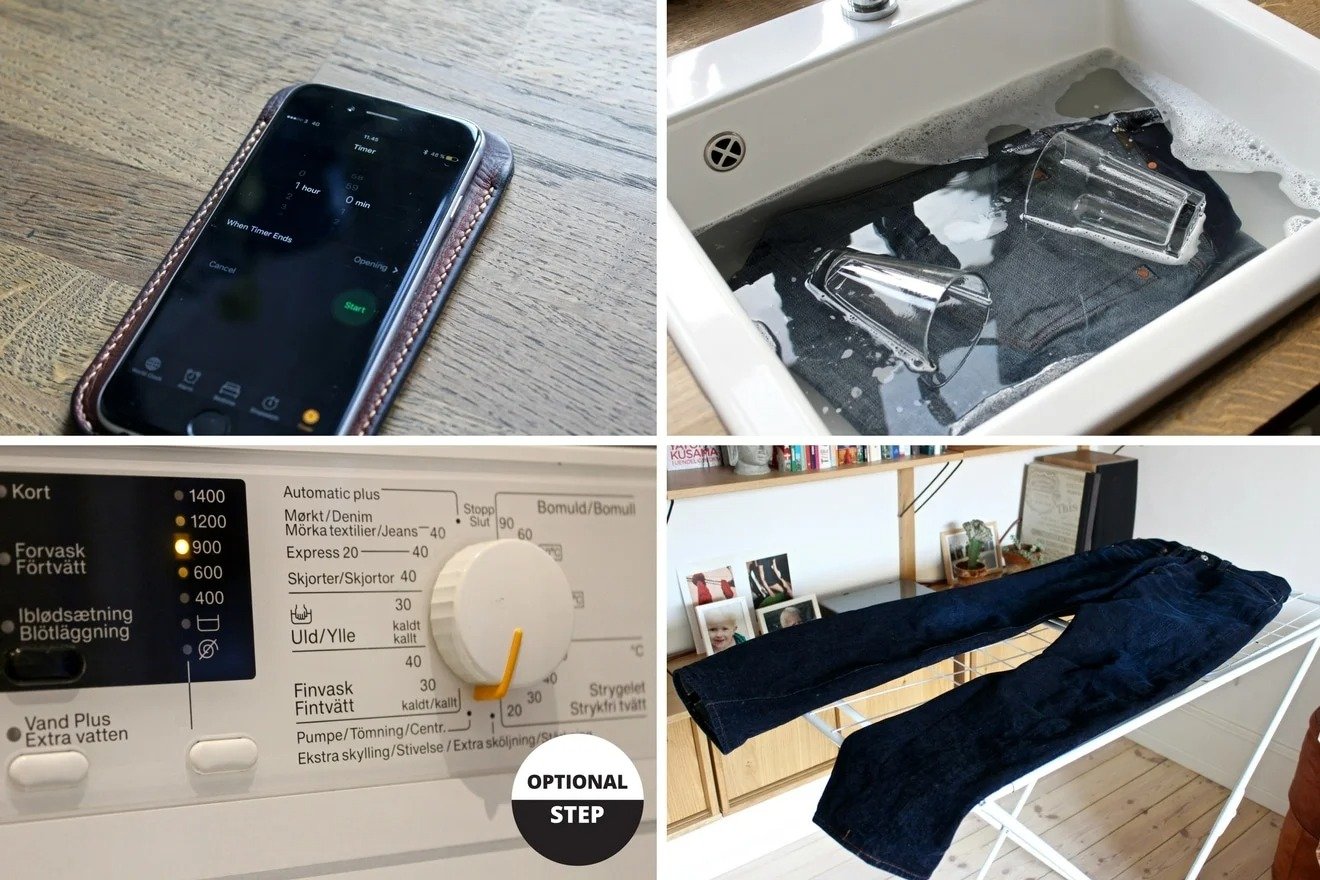
Use liquid detergent for delicates or dark fabrics. Stir to blend. - Gently agitate the jeans, then soak for minimum 60 minutes.
Spot-clean if needed—no scrubbing or twisting. - Drain the water and rinse thoroughly.
- [Optional] Run a spin cycle (max 900 rpm).
This removes excess water—but may cause some creasing and mild indigo loss. - Turn right-side out and hang or flat dry.
🚫 Never tumble dry—this can shrink and dull the denim.

The 5 Steps of Machine-Washing Jeans
Machine-washing is faster and more convenient—but it’s also tougher on denim and removes more indigo than hand-washing. If you go this route, use the gentlest settings possible.
Follow these steps:
- Turn your jeans inside out.
Protects the outer surface and helps prevent crease marks. - Use a delicate wash programme at 900 rpm or less.
The gentler the cycle, the less wear and indigo loss. - Add a small amount of non-bleach liquid detergent.
Look for formulas designed for delicates or dark fabrics. - [Optional] Add ½ cup (1 dl) of white vinegar to the rinse compartment.
Helps preserve colour, soften the fabric, and reduce bacteria. - When the wash finishes, remove the jeans immediately.
Turn them right-side out, smooth any creases, and line dry.
🚫 Never tumble dry—this can shrink and dull the denim.
Pro Tips for Washing Denim
- Vinegar helps stabilise colour and soften fabric. It also kills bacteria.
(Works for indigo, sulfur-dyed, and black denim.) - Use liquid detergent for delicates or dark fabrics.
Never use bleach or brighteners. - Keep spin cycles under 900 rpm to avoid creasing.
High-speed spinning can leave permanent vertical lines. - Avoid tumble drying unless you’re okay with shrinkage and colour loss.
If you want the denim to stay as dark and raw as possible, skip the spin cycle entirely.
How Jeans Washing Advice Became Clickbait
Washing advice has always been part of denim retail—but back in the day, it was about practicality, not aesthetics.
Before 1930, all jeans were shrink-to-fit, made from unsanforized denim that could shrink up to 10%. Sales staff had to explain this. If you sold jeans, you had to know how to talk about washing.
Today, most jeans are pre-shrunk. Shrinkage isn’t a major issue—but washing still sparks debate. Stories about not washing jeans have even gone viral in outlets like The Guardian and Business Insider.
In 2011, Canadian denimhead Josh Le made headlines after wearing his Nudie jeans for 15 months without washing. The surprising part? Bacteria levels were similar to weekly-washed jeans.
In 2014, the then-CEO of Levi’s, Chip Bergh stirred up denim discourse again by publicly saying you should never machine-wash jeans. It made mums cringe and denim nerds argue—and that tension still drives clicks today.
So why does washing denim get people so riled up?
Because today, it’s not just about hygiene. It’s about how jeans look—especially raw denim. Washing habits shape fades, and fades are what many denimheads care most about.
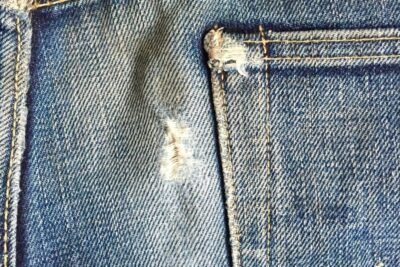
It’s the hope of getting fades like these that make denimheads postpone washing their jeans, which can have negative consequences.
How Raw Denim Changed the Conversation
Searches for “how to wash jeans” have steadily increased since 2004. In October 2013, interest peaked—right as “raw denim” hit its own search high.
Coincidence? Hardly. You can’t talk about raw denim without talking about fades. And fades are shaped by how and when you wash your jeans.
That autumn, raw denim exploded into the mainstream. But many retail staff were still telling customers never to wash their jeans. What they often didn’t explain were the risks of that approach.
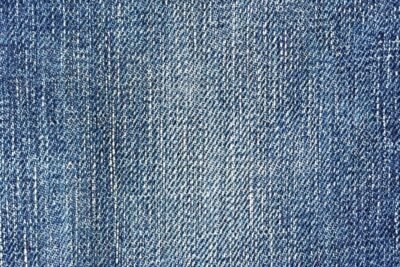
It’s when you wash you really see how slubby the denim is.
Why No-Wash Advice Doesn’t Work for Everyone
I learned this lesson the hard way.
Back in the day, one of my first raw denim projects was a pair of Nudie Average Joes in Kaihara denim. I wore them every day for nearly six months, holding off washing as long as I could. When I finally gave in—washing them at 60°C—the fades looked great. But the wash revealed several breaks on the honeycombs.
No one told me that the trade-off for high contrasts was less durability. I felt a bit betrayed.
That’s when I started questioning the six-month rule. It doesn’t ask what the wearer actually wants from their jeans—or whether they’re willing to sacrifice lifespan for sharper fades.
Once I realised the cost, I started soaking my jeans before wearing them, and washing more regularly. I still care about fades—but I also want the denim to last.
These days, most denimheads know the trade-off: less washing means sharper contrasts, but also a higher risk of crotch blowouts and broken creases. The no-wash mentality isn’t dead, but it’s no longer gospel.